ManuelOssanna

Things I make on the side. First edition.

No. 01

Hue of Year

Live

A diary for the end of the day. Each evening you log how it went, your energy and one small win. Every day becomes a colour, and over months a year of moods takes shape on a single grid.

Made for
iPhone, with home and lock screen widgets
Status
Live on the App Store
Your data
Your entries stay on your phone. No account needed.
Three views
Calendar, Prism for tomorrow's task, Echo for patterns
Get it on the App StoreRead the full entry

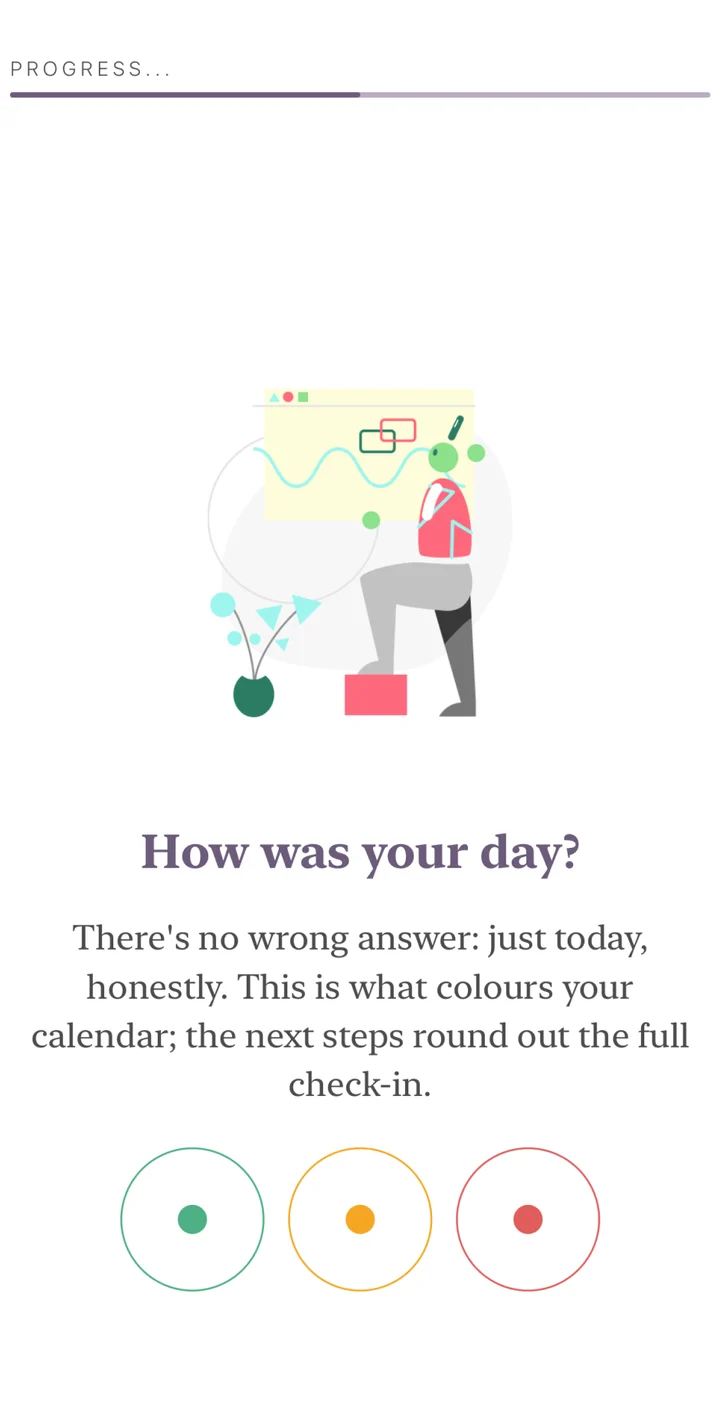
Hue of Year check-in screen asking “How was your day?” with green, amber and red choices
Fig. 1 The evening check-in. One tap sets the day's colour.
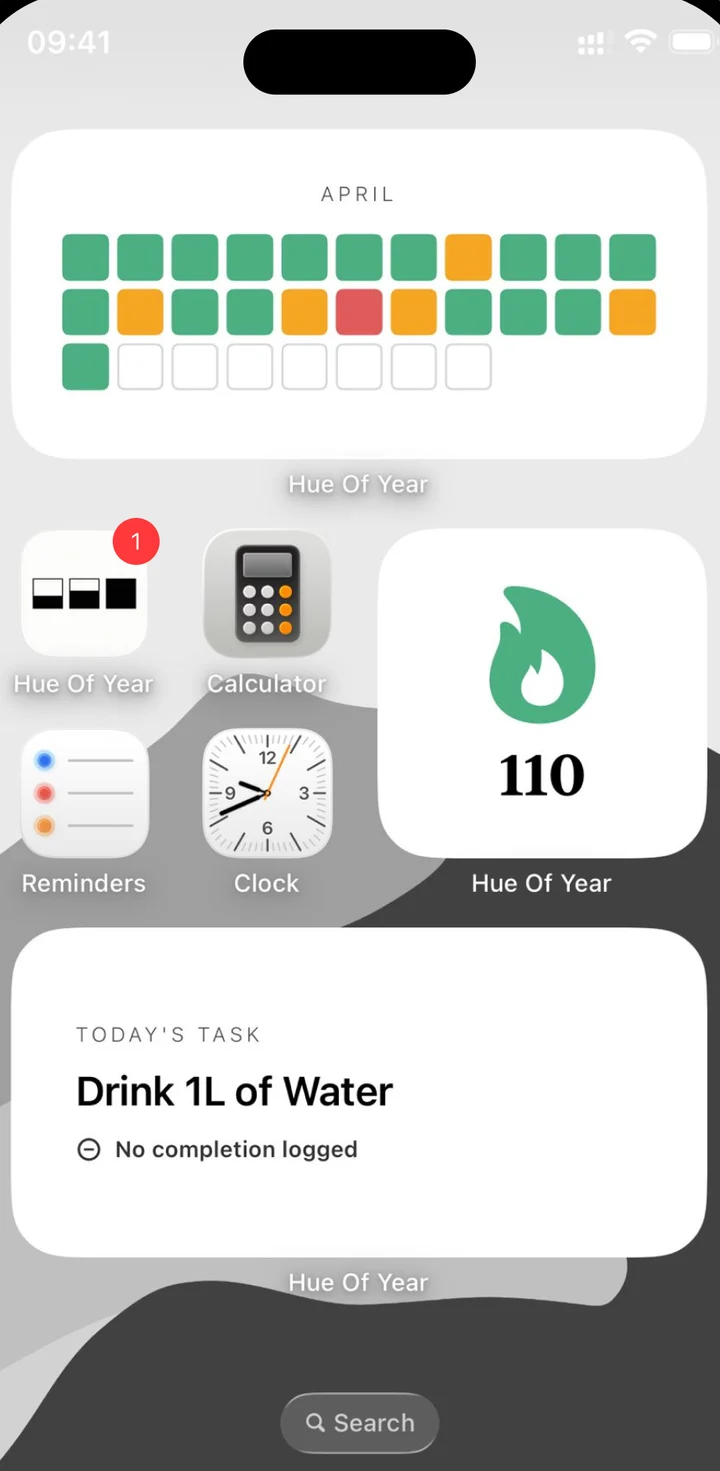
iPhone home screen with Hue of Year widgets showing April's colours, a 110-day streak and today's task
Fig. 2 Widgets keep the month and today's task on the home screen.
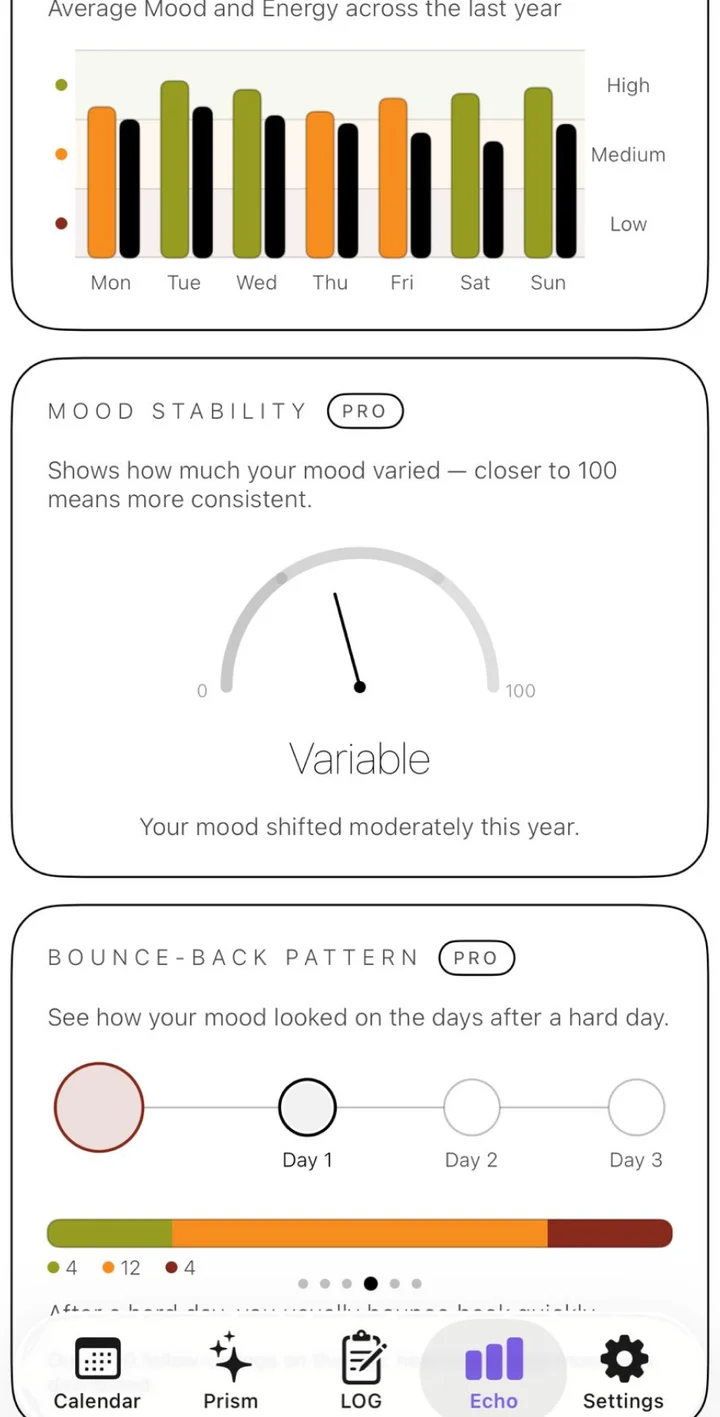
Hue of Year Echo view with charts of mood and energy by weekday, mood stability and bounce-back pattern
Fig. 3 Echo looks back: mood by weekday, stability, how you recover.

No. 02

AI usage CO2

Live

I used about 3.4 billion tokens over July and part of August, and wanted to know what that costs in CO₂. So I built a small, free tool that estimates it from your Claude Code logs or your ChatGPT export, right in your browser, without installing anything.

Open the toolSource on GitHub

What it does
ReadsYour Claude Code logs (through a short prompt you paste into Claude Code) or your ChatGPT data export
ShowsTokens by model and type, and CO₂ as a low, middle and high estimate
ExplainsEvery assumption behind the estimate, with its source
SuggestsWays to cut your footprint first. If you also want to give money, three ways to contribute to climate work.
RunsEntirely in your browser. Your files are never uploaded.
LicenceFree and open source (MIT)
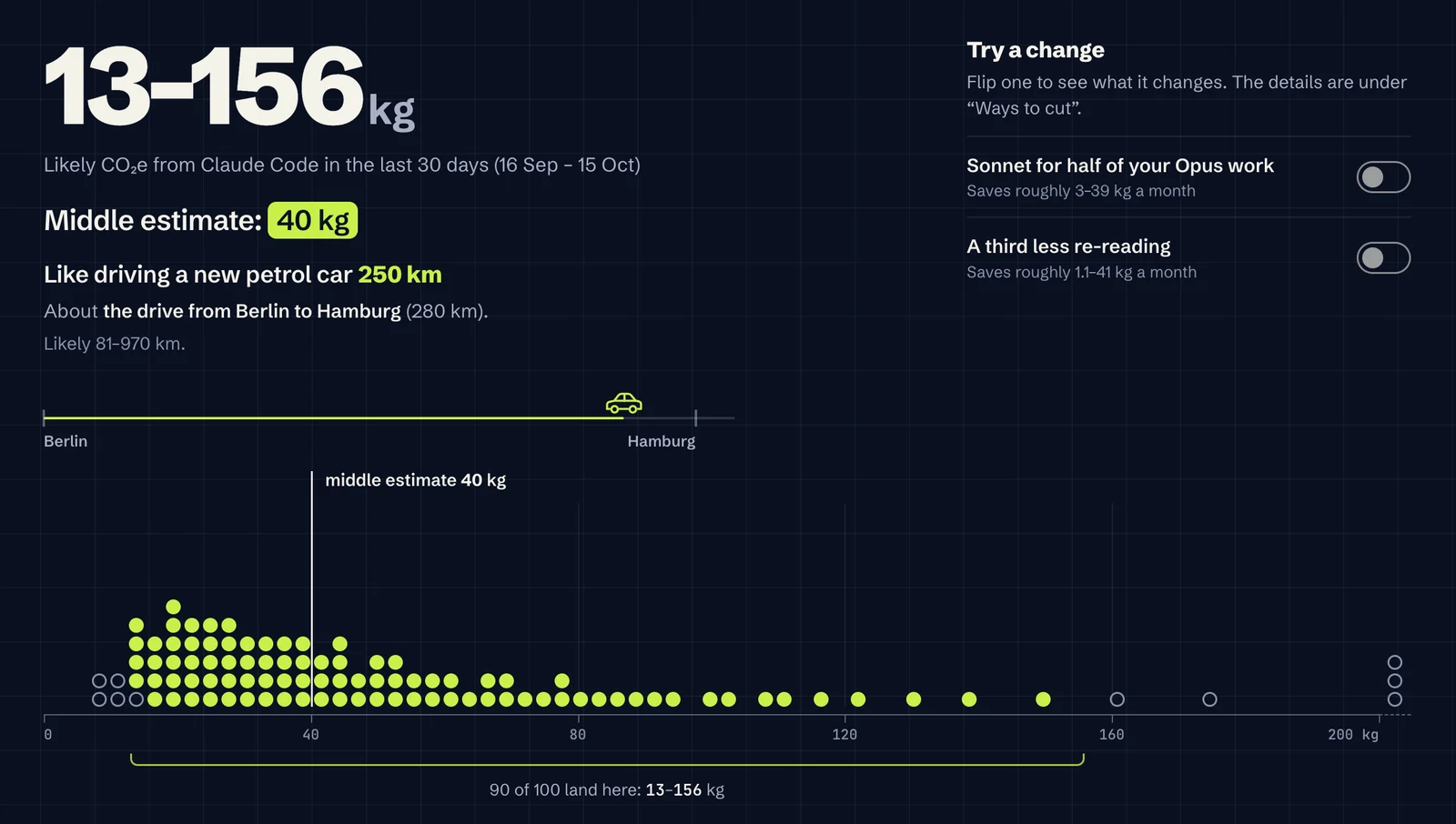
ai-co2 result: 13–156 kg CO₂e from Claude Code in the last 30 days, a middle estimate of 40 kg, like driving 250 km, drawn as a row of dots along a kg scale
Fig. 1 The estimate as a range. Each dot is one likely outcome, so you can see how sure it is.
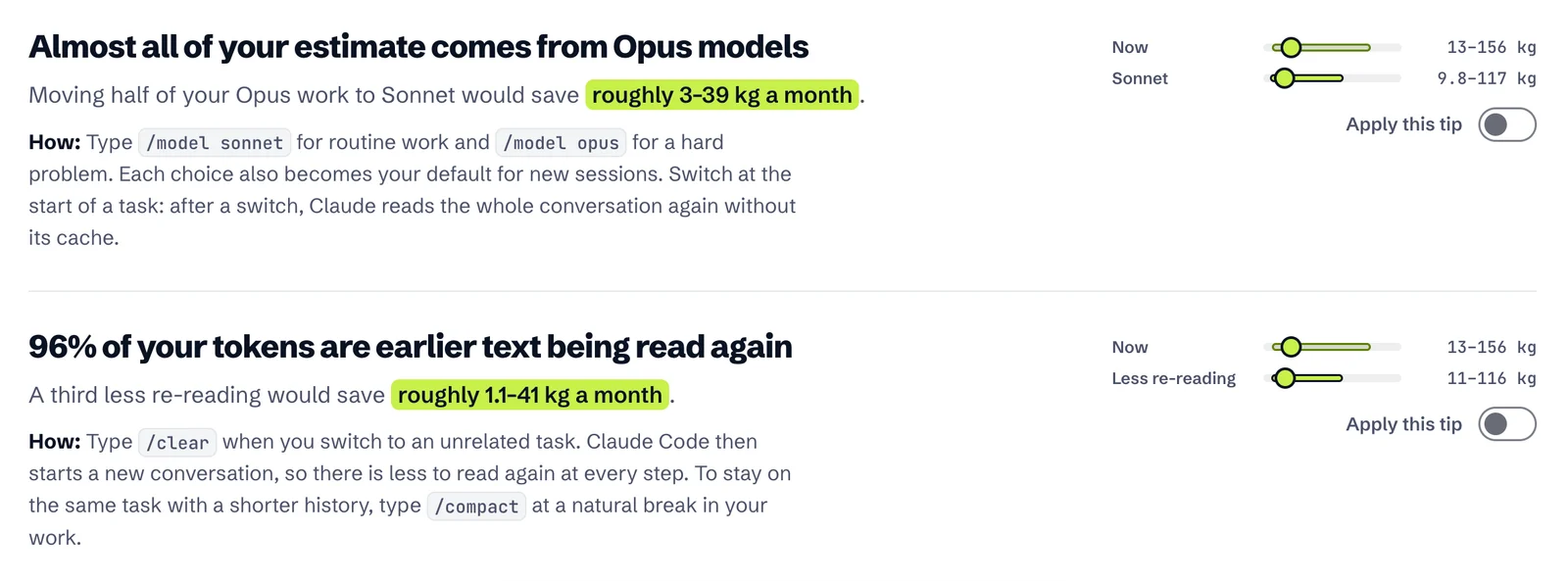
Two ways to cut: moving half of the Opus work to Sonnet, and a third less re-reading, each with the kilograms it saves and a switch to apply it
Fig. 2 Ways to cut. Each tip says how to do it and what it saves. One switch applies it to the estimate.

No. 03

thesis-kit

Live

A Cursor workspace for writing a thesis from sources you checked yourself. You open the folder, and it finds papers, checks them, and drafts one section at a time. It only cites papers you have opened and confirmed.

Get it on GitHubRead the full entry

What it does
OpensYou clone the repository and open the folder in Cursor. No coding.
ChecksEvery paper against Crossref and DataCite. It can be cited only after you confirm you read it.
DraftsOne section at a time, from those papers. Anything it cannot back up is marked [CHECK].
Hands offA Word file you keep editing, then supervisor comments brought back in as a list.
RecordsAn optional log of what the AI did, which becomes your AI declaration.
LicenceFree and open source (MIT)

A note from the compiler

I'm Manuel. I build things on the side, partly as a creative outlet, partly because I need to be making something. This is where they live: small, careful tools that show people something about themselves they'd otherwise miss and can be useful to them.

Three entries so far. More as they ship.

Manuel Ossanna